How art classes can support reflection, connection, and creative confidence
Art is often seen as a solitary activity — something deeply personal, private, and inward. And while that can certainly be true, there is also something incredibly valuable about creating alongside other people.
A good art class is not simply a place where techniques are taught. It is also an environment — and that environment matters.
When people feel safe, unjudged, and free to explore, creativity tends to open in a very different way.
A creative space should feel safe enough for honest expression
Making art can feel surprisingly vulnerable. Even a simple sketch or painting can reveal something personal — a preference, a mood, a memory, a way of seeing, or a part of your story.
That’s why the atmosphere in an art class matters so much. People need space to experiment without feeling watched, compared, or judged. When the pressure to “get it right” starts to fall away, it becomes much easier to create more honestly and more freely.
A peaceful, supportive environment allows people to take creative risks — and often, that is where the real growth begins.
Art can become a form of reflection
Creating is not only about producing an outcome. It is also a process of noticing.
As you work, you start to become aware of your own preferences, instincts, and patterns. You begin asking quiet but important questions:
What am I drawn to?
What colours feel like me?
What kind of imagery or subject matter keeps returning?
What story or feeling am I trying to express?
In that sense, art can become a reflective practice. Not because it has to be serious or heavy, but because it asks you to pay attention — and often, that attention reveals more than you expected.
Creating with others can deepen the process
Although art is personal, it does not have to happen in isolation.
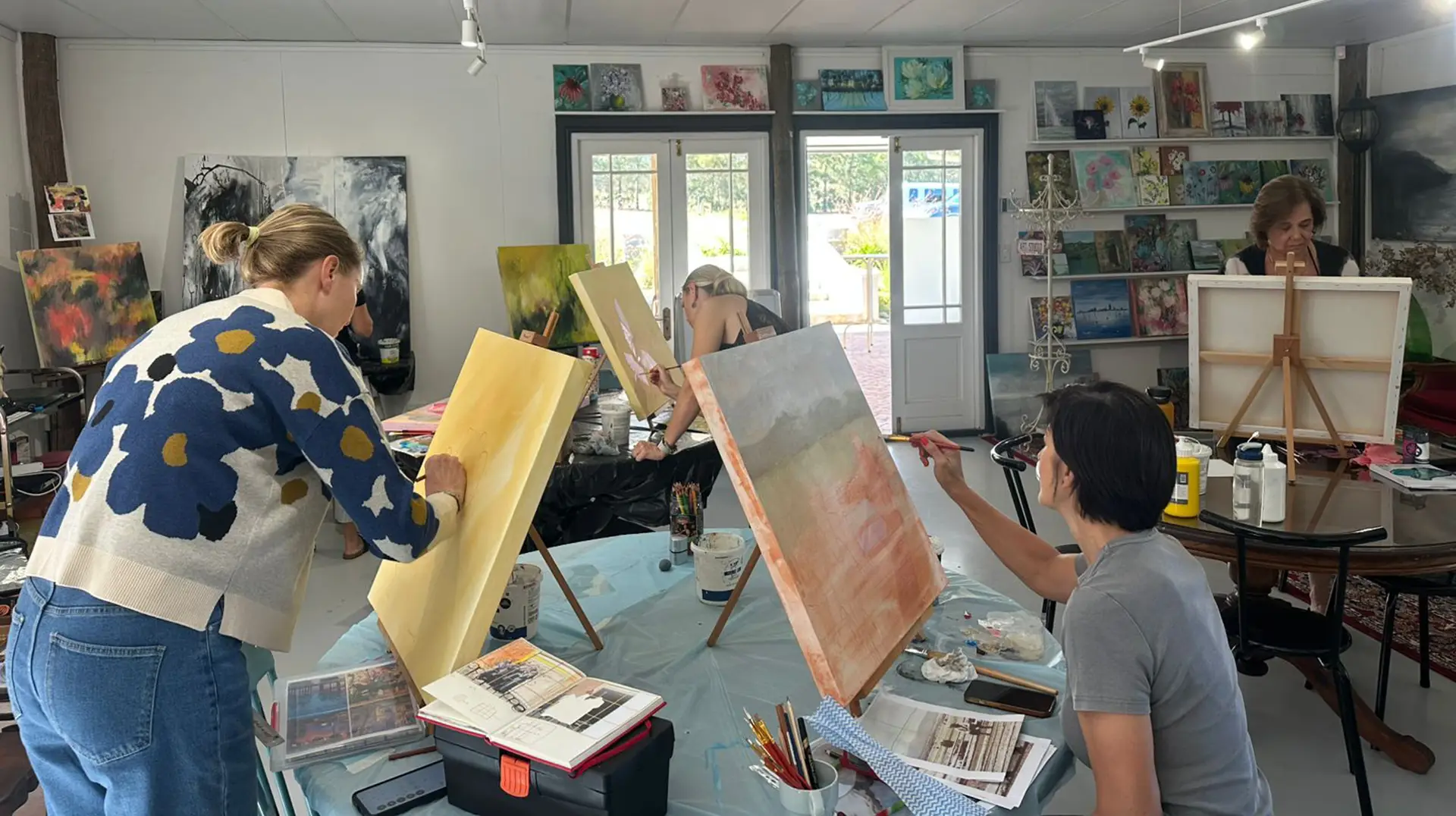
There is something meaningful about making work in the company of others who are also exploring, experimenting, and figuring things out in their own way. You start to see how differently people respond to the same prompt, material, or idea — and that difference becomes part of the richness of the experience.
Creating together can build confidence, spark ideas, and remind us that there is no single “right” way to make art. It allows people to learn not only from teaching, but also from witnessing one another’s creative process.
Final thoughts
Art is not only about learning techniques or producing finished work. It can also be a way of slowing down, paying attention, and discovering something about yourself in the process.
And when that happens in a thoughtful, welcoming space — alongside other people doing the same — it becomes about more than making art.
It becomes about connection, reflection, and finding your own way of expressing what matters to you.